Bin inspections and feedback
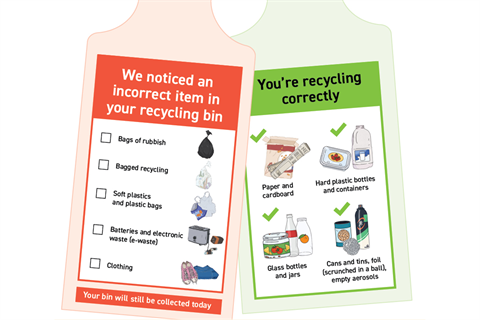
To help improve recycling, Council inspects bins and provides households with feedback.
We know people want to do the right thing, but it’s not always easy to know which bin to use. You may find a tag on your bin or receive a letter with some information to help you to recycle right.
About the program
As part of Council’s community waste education program, we conduct visual inspections of recycling bins to provide feedback, improve recycling and reduce incorrect items (also known as contamination) in the recycling bin. Cameras in the trucks are used to identify incorrect items, and staff also check some bins prior to collection.
These inspections allow us to provide direct feedback - either through a tag on the bin or a letter to the household - on what to put in the recycling bin and what to keep out.
The program can also include green waste bins (lime-green lid).
Why is Council inspecting bins?
Putting the right things in the right bin is good for the environment and our community. When recycling is contaminated, it makes it hard to sort and turn into new products, and disposal costs increase.
Audits show around one quarter of what goes in the recycling bin shouldn't be in there. We can do better.
By recycling right and keeping incorrect items out of household recycling, you’re helping to:
- Make it easy to sort items into clean, valuable separate materials to make new products. For example, sorted paper contaminated with plastic bags can mean it can’t be used to make new high-quality recycled paper.
- Save recyclable materials from landfill so they can be used again and again.
- Keep people and workplaces safe. Contamination, including bagged recycling and hazardous items, poses a risk to staff at the processing facility. Incorrect items can also damage or get caught in equipment, and some items like batteries and gas canisters cause fires in collection trucks and at recycling facilities.
- Reduce our reliance on new and raw materials.
- Contribute to a circular economy and build a strong local recycling industry.
- Keep recycling costs down.
What is contamination?
Contamination is incorrect items in the bin. The main problems in recycling include bags of garbage, bagged recycling, soft plastics/plastic bags, batteries, e-waste or electronic waste, clothing/textiles, building rubble/renovation waste and food.
How the program works
Recycling bins are inspected using the cameras in the recycling collection trucks. The truck’s camera captures the contents of the bin as it is emptied into the truck. Households with contaminated bins are sent a letter to help improve their recycling.
Other times, the team visits bins at the kerbside on bin collection day before the collection truck. They assess the contents of the recycling bins by lifting the lid and viewing the contents. A tag is placed on the recycling bin to provide feedback about the bin contents and how the household can improve their recycling.
| Tag type |
What it means |
Next steps |
| "Thank you" |
Thank you, no contamination was found |
Keep up the good work and do a quick refresh of what can go in the bin in case there were some incorrect items we couldn’t see |
| "Oops" |
Contamination was found |
Specific feedback will be on the tag (keep these items out of the bin next time) |
| Pink sticker |
High contamination or hazardous items found in the bin |
Bin will not be collected, and resident will need to remove the contamination or hazardous item and dispose of them correctly, then call Council to organise a follow up collection |
The bin tag is made from 100% recycled paper and can be placed in your recycling.
Share the information on the tag with your household. You may like to keep it as a reminder of what can and can't be placed in your recycling bin.
If your bin was not collected
If your recycling bin was not collected following an inspection, it will have a pink sticker placed on it. You will need to remove the incorrect items indicated on the sticker before calling Council to arrange a follow up collection.
Collection points (where there are multiple bins)
If your bins are placed on the kerbside alongside those from other properties, this is considered a collection point. It may not always be possible to determine which bin belongs to which household.
If contamination is identified in any of the bins at a collection point during inspection by the collection truck camera, Council will send letters to all households likely to use that collection point.
If you didn’t put incorrect items in the bin
We understand that the incorrect items may have been placed in your recycling bin by someone else. Our aim is simply to provide feedback to households, so everyone can support recycling in Nillumbik.
If neighbours are contaminating bins, try to talk to them directly to highlight the issue. If there are ongoing issues, please let us know and we can send a letter to the area.
Fines
There are no fines for contaminating bins. The purpose of the inspection is to educate and provide feedback to improve recycling.
However, bins may not be collected when:
- contamination in the bin is very high
- hazardous items are observed in the bin
- there is ongoing contamination without improvement
Find out more
If you're unsure of what goes into each bin, visit the bin service page.
To find out how to dispose of a particular item, visit the A to Z of waste and recycling.
Bin inspection FAQs
Why is Council looking in my bin?
We understand this can feel personal. Bin inspections are visual checks designed to help reduce contamination and support better recycling outcomes across the shire. Inspections happen when the truck’s cameras capture the bin contents as they’re emptied, or staff conduct quick kerbside checks before collection. They are not an assessment of you or your household – just the material in the bin.
Council audits show that around one‑quarter of items placed in recycling bins shouldn’t be there. Contamination makes sorting more difficult and expensive, can damage equipment and sometimes puts workers’ safety at risk. By checking bins and providing feedback, we can help keep recycling cleaner, more cost‑effective, and safer for the whole community.
Do you collect personal information during bin inspections?
Bin inspections involve a quick visual check of the material inside the bin. Staff do not remove items or assess anything unrelated to the waste.
Sometimes photos may be taken to accurately document contamination or hazardous items. These are used only for operational and safety purposes and are stored securely by Council and our waste contractor. Access is limited to authorised, trained staff who need them for waste collection, customer service and safety reasons.
While images may capture part of a property frontage as the bin is positioned at the kerbside, they are not used to monitor anything unrelated to the kerbside bin service.
Bin inspections are conducted in accordance with Council's privacy policy. For more information read our privacy statement.
Are certain households or streets being targeted for bin inspections? How does Council decide which bins to check?
Council’s bin inspections are not designed to single out individual households or streets. Truck‑based inspections occur automatically as bins are emptied, and kerbside checks take place across different areas and collection days as part of Council’s ongoing waste education program.
Some residents may receive a letter because contamination has been identified in their bin at a previous collection. These follow‑up letters are intended to provide extra guidance, not as a penalty or judgement. Recycling rules can be confusing, and we’re here to help you get it right.
All feedback – whether through bin tags or letters – is about helping make recycling easier, safer, and more effective for everyone in the community.
Can other people see the result of my bin inspection?
Usually no. For routine inspections, Council uses a standard tag that looks the same on the outside and shows only general recycling information. Any specific feedback is on the back of the tag and isn’t visible unless it’s turned over. In rare cases involving safety issues or major contamination, a different alert may be used so collection staff can manage the bin safely. Our focus is on providing clear guidance to help support good recycling habits – not on singling anyone out.
It’s not my contamination in the bin. What should I do?
We understand that, from time to time, someone else may place items in your bin without your knowledge. All feedback is based only on what is visible in the bin at the time of inspection or collection.
If the contamination wasn’t yours, you can disregard the bin tag or letter. We know that once a bin is placed out for collection, it’s not always possible to control what others might add, and we appreciate residents who are doing the right thing.
If this is an ongoing issue in your area, please let us know so we can investigate where possible. Any information you can provide about where the contamination may be coming from is helpful.
I feel stressed or upset about receiving a contamination notice – what support is available?
We understand it can feel confronting, especially if you’re doing your best. The bin tags and letters are simply educational tools. You’re always welcome to contact us if you’d like help understanding the guidance or recycling rules. Our goal is to support you, not judge you.
Could the camera or staff inspections be mistaken – how accurate are they?
The cameras capture items as they fall into the truck, and staff conduct visual checks. These methods are reliable for identifying common contaminants like soft plastics, bagged recyclables, clothing, batteries, or food waste. If you ever feel a notice was issued in error, we encourage you to reach out so we can discuss it.
Why wasn’t I warned before receiving a contamination letter?
Because inspections happen during normal collection, you may not know your bin has been checked until you receive feedback. The intention isn’t to surprise you – it’s simply the most practical way to provide timely guidance based on what was seen on the day.
Can I opt out of bin inspections?
Bin inspections form part of the standard waste education program used across many councils and help keep recycling effective and affordable. Because contamination affects the whole community, opting out isn’t available.
However, if you have concerns about how feedback is provided, we’re always willing to discuss them and support you to feel comfortable with the process.
Will I be fined or penalised if I keep getting contamination notices, or can Council refuse to collect my bin?
Our program is focused on education, not punishment. Bin tags and letters are intended to help you understand what belongs in each bin so the whole community benefits from lower contamination and safer recycling.
There are no fines associated with bin contamination.
In most cases, receiving a feedback tag does not affect whether your bin is collected. However, a bin may be left uncollected in two situations:
- High or ongoing contamination
If a bin contains a significant amount of incorrect material, it cannot be processed safely or effectively at the recycling facility. In these cases, the bin may not be collected until the incorrect items are removed and the bin can be presented correctly for collection. Where contamination continues without improvement over time, we may also temporarily leave the bin uncollected as part of our education process.
- Hazardous or dangerous items
Items such as batteries, e-waste, gas canisters and other unsafe materials can cause fires or damage in collection trucks or at recycling facilities. For safety reasons, bins containing these items will not be collected until the hazards are removed.
If a bin is left uncollected, you’ll receive a pink sticker explaining why. Once the incorrect or hazardous items have been removed and disposed of properly, you can contact Council to arrange a follow‑up collection.
Our priority is to keep the service safe while supporting residents to use their bins confidently and correctly. If Council ever considered additional enforcement measures in the future, this would be communicated clearly and openly.
What is considered hazardous material?
Hazardous materials are items that can be dangerous to people, infrastructure or the environment. These should never be placed in any kerbside bin.
Common hazardous items include:
- batteries (household, car batteries, and vapes)
- electronic items (anything with a plug, power cord, or battery)
- syringes and sharps
- household chemicals (like oven cleaner, acids, alkalis, weed killers)
- flammable products (fuels such as petrol, diesel, kerosene, and products like turpentine, paint thinners, and strippers)
For safe disposal options, please check our A to Z of waste and recycling.
Why focus on residents instead of improving sorting at the recycling facility?
Recycling facilities can sort materials, but only to a point. When the wrong items – like batteries, textiles, or soft plastics – enter the recycling stream, they can cause fires, machinery jams, contamination of entire loads, or even put workers at risk. By reducing contamination at the source, we improve safety, cost efficiency, and environmental outcomes.
Does my recycling really get recycled?
Yes. All materials collected in your yellow recycling bin are taken to Cleanaway’s materials recovery facility in Coolaroo, where they are sorted and processed for recycling. Facilities like this are designed to handle a small amount of contamination, but they work best – and recover the most material – when recycling is as clean as possible. Avoiding incorrect items helps ensure more material is successfully recycled and reduces safety risks and processing costs.
How does contamination affect rates or the cost of waste services?
Contamination doesn’t just affect recycling quality; it also has a financial impact on the community. When the wrong items go into the yellow bin, processing becomes more difficult and more expensive, and contaminated loads may even need to be disposed of instead of recycled. Reducing contamination helps keep waste management costs down for Council and, ultimately, for ratepayers. The bin inspection program supports this by helping households recycle correctly, which improves efficiency and reduces avoidable costs.
How does Council ensure the program is fair and inclusive?
We know that every household has different needs, circumstances and challenges. That’s why an equity impact assessment has informed the program’s design, ensuring it is fair, respectful and accessible for all residents. The program recognises that most people don’t contaminate their bins intentionally and focuses on awareness, education, support and engagement rather than blame. Staff approach inspections with sensitivity and follow a consistent methodology so everyone receives the same clear and respectful feedback.
What training do staff receive, and how do they conduct inspections?
Bin inspection staff are trained to carry out checks consistently, sensitively and respectfully. Their role is to simply observe what is visible in the bin and provide constructive guidance that helps residents recycle correctly. They follow a clear and consistent process, grounded in proven education and behaviour‑change approaches, and always focus on identifying items – not households. The aim is to support residents with helpful, practical feedback.
Why is my bin sometimes re-inspected?
If an incorrect item was found previously, staff may return to re‑check your bin to make sure the issue has been resolved, and to offer further support if needed. This follow‑up process is part of the program’s educational approach and helps ensure that everyone has the chance to understand the feedback and make any changes confidently. It is not punitive – it’s simply a way to reinforce learning and reduce contamination over time.
What evidence shows that bin inspections work?
The program is based on more than a decade of successful practice, insights from other councils, education and behaviour‑change specialists, and Monash University research. Bin inspections and individual feedback are a standard, well‑established method used across Victoria and beyond. They have been shown to reduce contamination, improve recycling habits, and deliver environmental, safety and cost benefits for communities. Your feedback also continues to help refine and improve the program.
Are Council staff or contractors allowed to inspect kerbside bins?
Once a bin is placed on the kerb for collection, it is considered presented for service as part of Council’s formal waste collection program. Kerbside bins are Council‑provided assets, and the service operates under conditions set by Council, including what materials may be placed in each bin, weight limits, and collection times. This gives Council staff or authorised contractors the ability to carry out visual inspections of bins at the kerb to identify contamination, provide feedback and ensure safe and efficient collection. These inspections are a standard part of waste education programs used by councils across Victoria. Bin inspections are also supported by the Circular Economy (Waste Reduction and Recycling) Act 2021 (Vic), which requires councils to meet service standards, report accurate waste and recycling data, and improve recycling outcomes across the community.
For more information about Council’s local laws relating to waste services, visit Local laws, particularly Clause 54.